
Finding Danville Residents
Public records in Danville can start from almost anything. A name, an address, or a stray street listing opens a different door. Search the Danville residents directory with whatever fact you already hold. Then test each result against a second record. To find who lives on a street in Danville, try a parcel lookup first. It is usually the quickest step. From there, deeds, court indexes, and old directory volumes each add their own piece. The library keeps the older trail alive. Anchor every answer to its date and its custodian.
- Enter a known street address in the city parcel search and record the site address, account number, legal description, and owner field.
- Use the owner or a recording reference at the Circuit Clerk to locate the related land instrument.
- For a historical household, ask the library for the closest city-directory year and read the street and name indexes together.
- Use a court, probate, or vital-record route only when it answers a specific identity or family-history question.
- Request a bounded record class and date range from the custodian when the needed material is not online.
Note: A parcel, deed, directory, and census record can corroborate each other, yet each one speaks only for the date and purpose behind it.
Danville Resident Records Counters
Four counters cover most of the work. The Danville Circuit Court Clerk keeps permanent land, court, estate, marriage, judgment, and charter records for the city. Assessment, ownership, mailing addresses, parcel maps, and appeals live with the City Real Estate office. The Registrar runs local voter registration. For directories, newspapers, microfilm, and genealogy databases, the Ruby B. Archie Library is the practical counter.
City Real Estate
427 Patton Street, Room 301
Danville, VA 24541
434-799-5120
Danville Registrar
530 Main Street, Suite 100
Danville, VA 24541
434-799-6560
Match your request to the office that owns the record. One address may surface in an assessor card, a deed, a court filing, and a directory. Those custodians are not interchangeable.
Danville Parcel Search Choices
For a current address, the city's MapInsights parcel viewer is the strongest starting point in the Danville residents directory. Its public setup offers Search by Address and Search by Owner. Search by Parcel ID and Advanced Parcel Search are included too. Address and owner matching works on a contains basis. A brief street name or surname can pull up several parcels at once. Adding a parcel account, legal description, zoning, sale date, or land-use field separates the look-alikes.
| Danville search | Field | Useful result |
|---|---|---|
| Address | Site address | Parcels sorted by site address |
| Owner | Owner 1 | Owner string for comparison |
| Parcel | Parcel Account ID | Local parcel identifier |
| Advanced | Legal description or zoning | Land-record context |
| Advanced | Sale date, price, land use | Transfer or parcel context |
The assessor page lays out the city's real-estate role and feeds into the parcel route. A parcel result is property evidence, not a household roster. Pair it with the legal description before you chase the deed chain.
Note: Record the account, map number, and legal wording before switching search terms, since a street label alone may not hold steady across older sources.
Danville Situs and Mail Fields
Danville parcel data splits the situs address from the tax mailing fields. Situs is the physical location of the parcel. Mailing fields show where the tax office sends its letters. The two can match, but they answer separate questions. A mailing address may sit in another town entirely. Neither field supports claims about everyone connected with the property.
- Parcel account
- The assessor’s identifier for a specific parcel.
- Situs address
- The physical location assigned to the parcel.
- Legal description
- The lot, block, metes-and-bounds, or other recorded land identity.
- Index
- A finding aid that points to a record; it is not always the document image.
The Danville Real Estate page describes the assessment route. That route keeps ownership and mailing records current. Its parcel-search view appears on that page. Treat the owner, situs, legal, and mailing entries as distinct fields. When the deed chain matters, carry the legal description straight to the clerk.
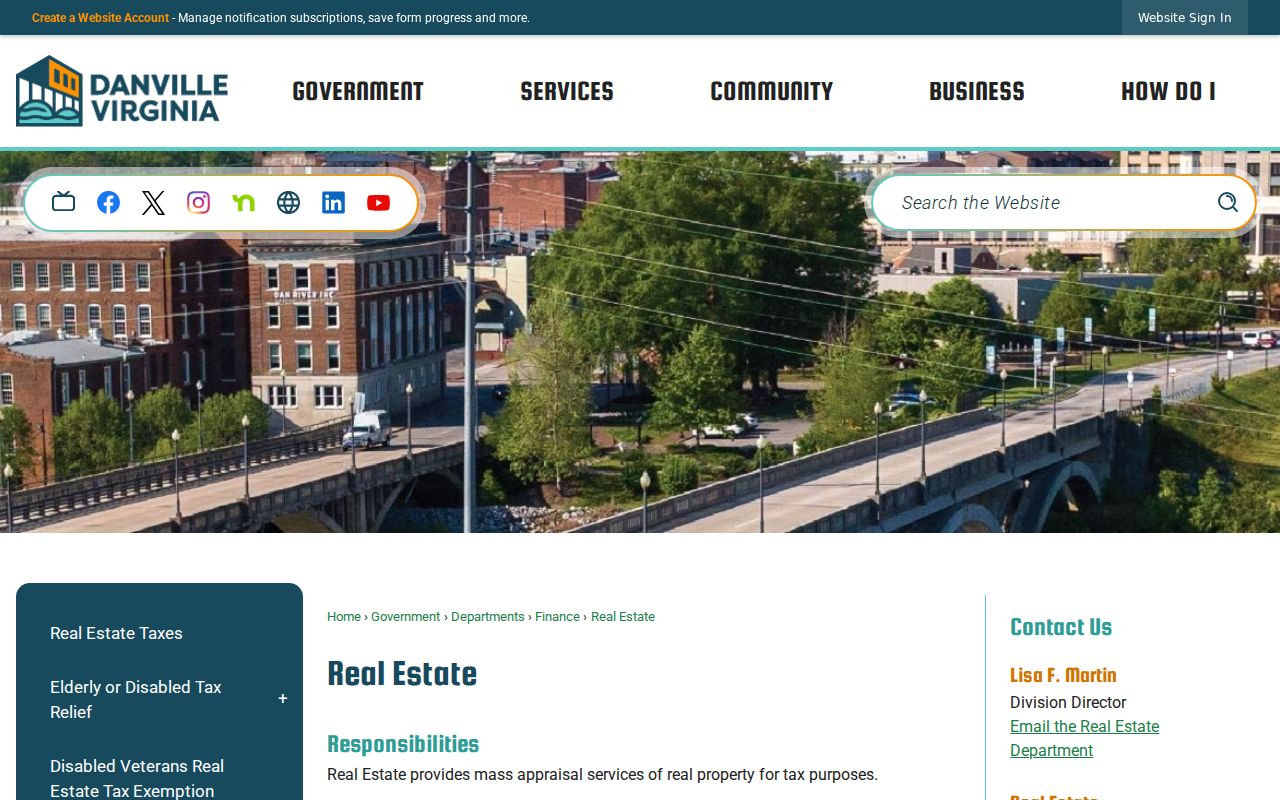
The assessment page links an address search to the city's property record path. It does not turn the assessment card into a roster of occupants.
Current Danville Resident Sources
Records that look current in the Danville residents directory cover different ground. The parcel layer names recorded owners and property fields. The clerk's land index lists parties to recorded instruments. Virginia's voter system offers a self-service status check for the voter. It also runs a separate public-list request procedure. City staff listings name public employees in their official roles, not private households. Treat each route as a focused source, and confirm any identity with a second one.
| Danville source | What it can establish | Custodian | Access |
|---|---|---|---|
| Parcel assessment | Owner, parcel, situs, mailing fields | City Real Estate | Public GIS and office |
| Recorded land index | Parties and instrument trail | Circuit Clerk | Index where enabled; images vary |
| Voter procedures | Permitted voter-list fields | Registrar and Elections | Statutory request route |
| City staff directory | Public office contacts | City departments | Official directory |
| Library collections | Past address associations | Danville Public Library | Shelf, microfilm, and databases |
Once an address or dated record gives you a solid anchor, move the person-specific question to the Danville resident lookup workflow. That keeps a shared name from blurring into the wrong person.
Danville Court Index Limits
Virginia Case Information routes visitors into selected Circuit, General District, and appellate case-search tools. The local search accepts a court or locality selector. It also takes a party name, case number, hearing date, and court-specific status or division controls. A visible result can carry a case number, party role, case type, dates, and disposition. It is an index layer only, not a stand-in for the local file.
The Danville Circuit and General District clerks still hold the local files and public terminals. Juvenile, sealed, expunged, adoption, and protected family matters may stay out of ordinary public searching. A blank result is not proof that no case exists. Pick the correct court. Use a tight date range. Bring a case number when you can.
The official Virginia case-information landing page shows the separate court routes side by side. It helps you choose the right court layer. Then ask the Danville clerk for a file reference or certified copy.
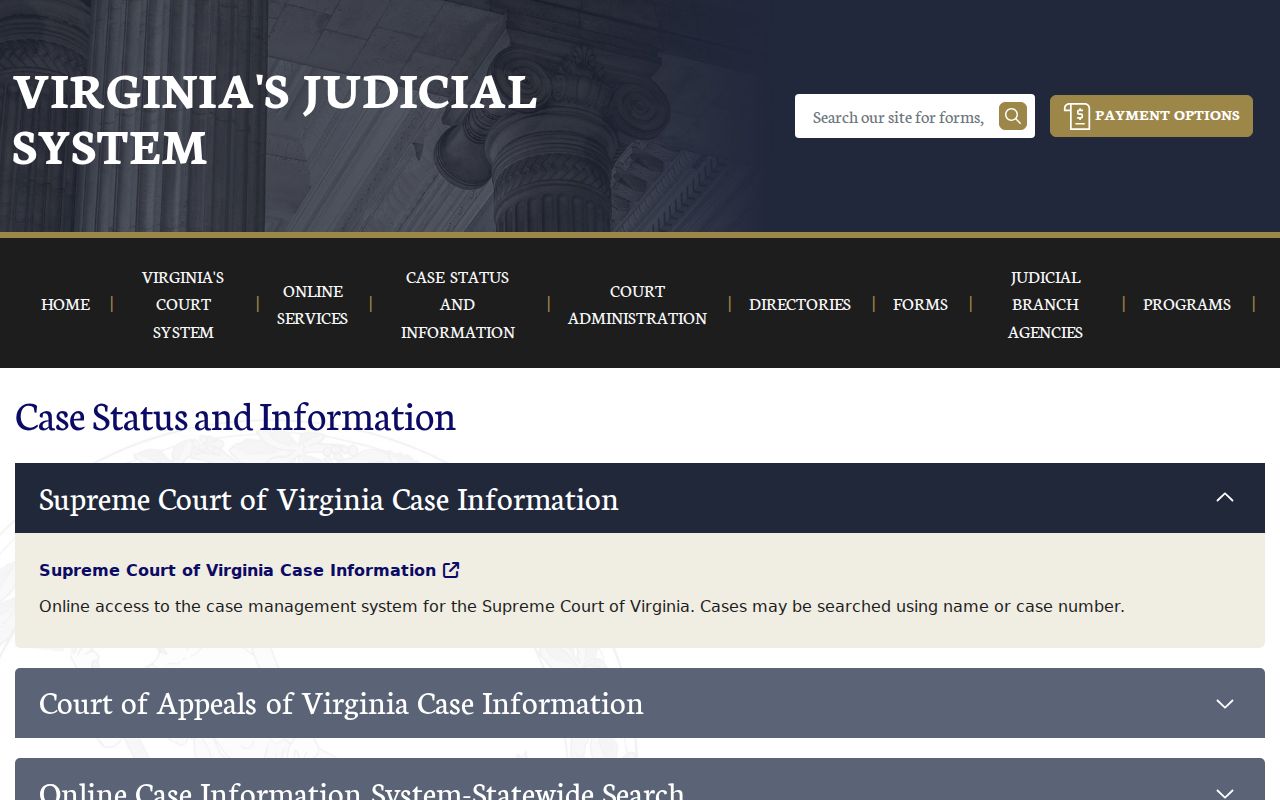
Statewide case information is divided by court path. That split is why locality and court selection matter in any Danville search.
Choose the wrong court path and the case record stays out of reach.
Danville Voter List Route
Virginia keeps voter records in two separate lanes. The Virginia voter-information portal serves the voter personally, showing registration status, polling place, district, absentee details, and voting history after sign-in. It is not an anonymous directory. Anyone wanting the public voter rolls must go through the separate Title 24.2 request process, which is how Virginia law handles list access. Protected addresses stay shielded. Full Social Security numbers and full dates of birth never appear as public list fields.
Danville residents with registration questions should contact the local Registrar. A proper list request names the exact product and filters, because a simple street search will not return every household on a block. Virginia also skips party registration entirely. Ballot choices remain private. The Citizen Portal is a status tool, not a workaround around the statutory list route, and protected-voter procedures deserve that respect.
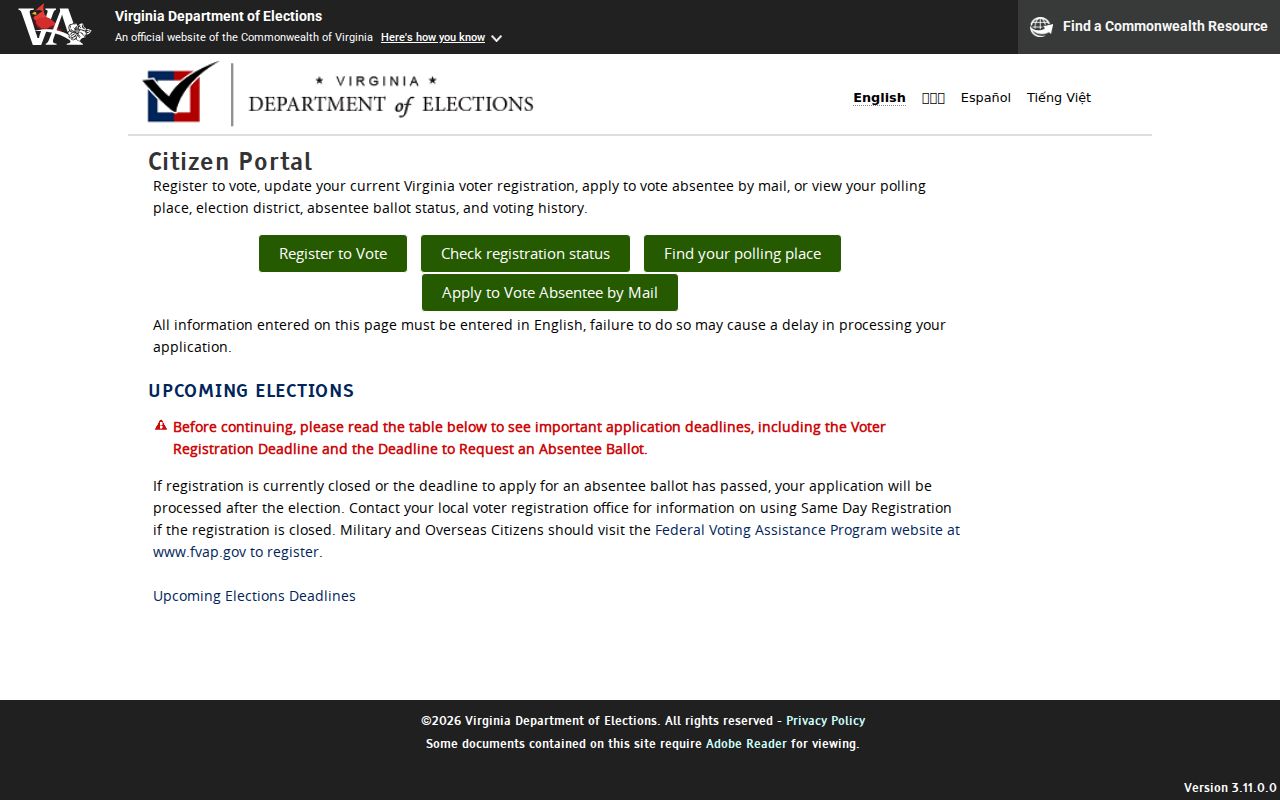
Registration and district status are the portal's whole focus. Virginia election law routes public-list requests through a separate process.
Danville Vital Record Windows
Certified birth, death, marriage, and divorce records for Danville events come from the Virginia Department of Health Office of Vital Records. Birth and death records open after 100 years. Marriage and divorce records open after 25. Earlier than that, identity and eligibility rules apply. The Circuit Clerk keeps marriage-license and court-file material on a custody path of its own.
Virginia's application forms gather the record type, requester name and address, relationship or authority, registrant's name, event date and place, identification, payment, and signature. The certificate or search fee is $15 effective July 1, 2026. Timing differs by mail, online, or express route. A certificate is never a full court case file.
The VDH forms page lists record-specific applications and ordering routes. Pick the right one for your purpose. A loose name match alone leaves gaps in family-history work. Some city records never get posted online. When one stays open to the public, the Virginia FOIA quick reference helps frame a specific request, date range, and preferred format.
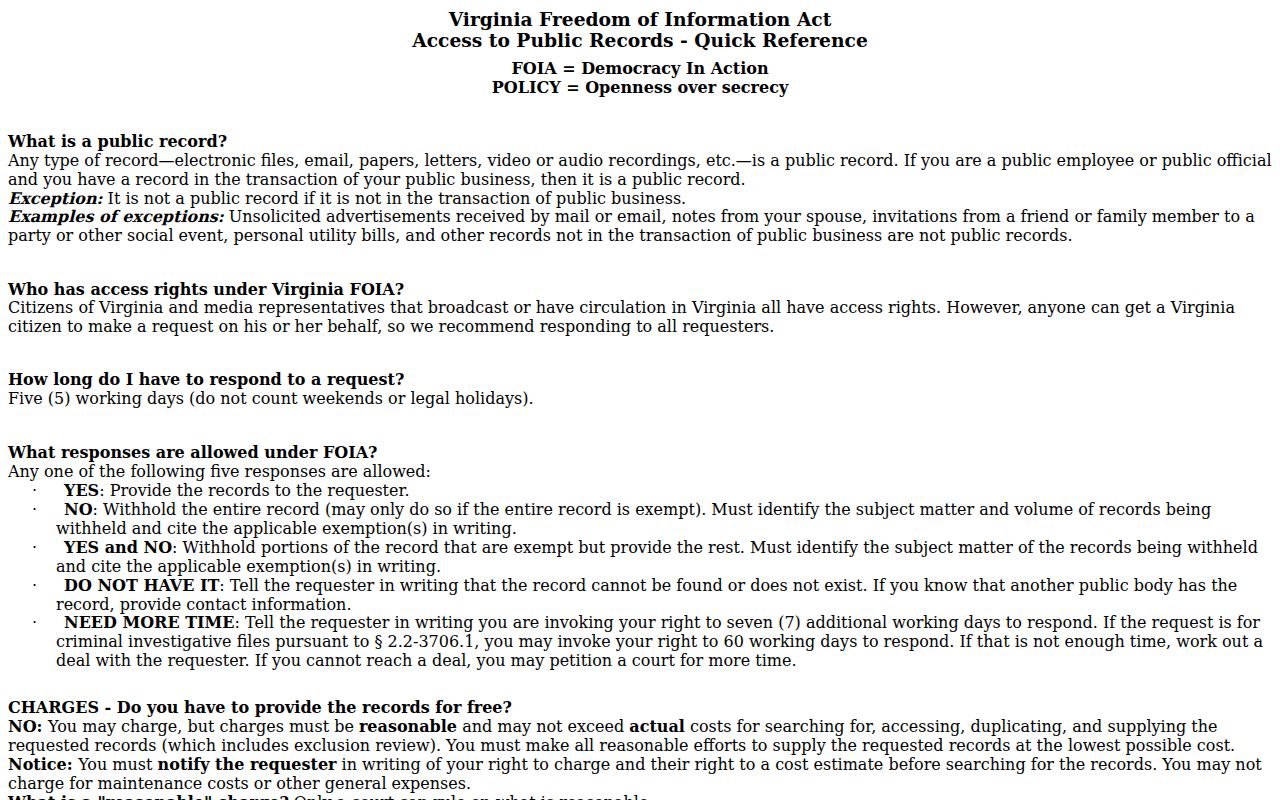
The quick reference fits non-posted city records that are open to request. Vital certificates follow their own eligibility rules instead of a general records request.
Danville's 1841 Deed Trail
Danville's land records run from 1841 to the present. So begin with the parcel's legal description and current owner. Then search the grantee side of the grantor-grantee index for the likely acquisition. A deed often names an earlier seller. It may cite a book and page, instrument reference, or legal description. Search that seller as a prior grantee.
Remote access is layered. The Virginia Secure Remote Access portal can provide index access where the locality enables it. Images require local-clerk authorization and a subscription. The courthouse terminal, a clerk copy request, and Library of Virginia microfilm form the fallback chain. A 2026 back-scanning initiative digitized Danville deed books and indexes back to 1841. But not every image becomes an unrestricted download.
Use an index hit as a route to the instrument. Then verify the legal description against the parcel record. Connect it to an address history only afterward.
Note: A recorded owner or deed party has a legal connection to a parcel on a stated date. Not automatic proof of occupancy.
Danville Custody Lookup Fallback
Danville publishes no online jail-roster search. For anyone held in state custody, the Virginia Department of Corrections locator is the tool to use. It works with the first three letters of a first name plus a full last name, or a DOC ID. That state system covers prisons, not the local detention roster. When the state locator comes up empty, the city's Adult Detention office and VINE serve as the documented fallback channels.
The Virginia DOC locator entry page marks the statewide search route. That route is separate from any local custody question.
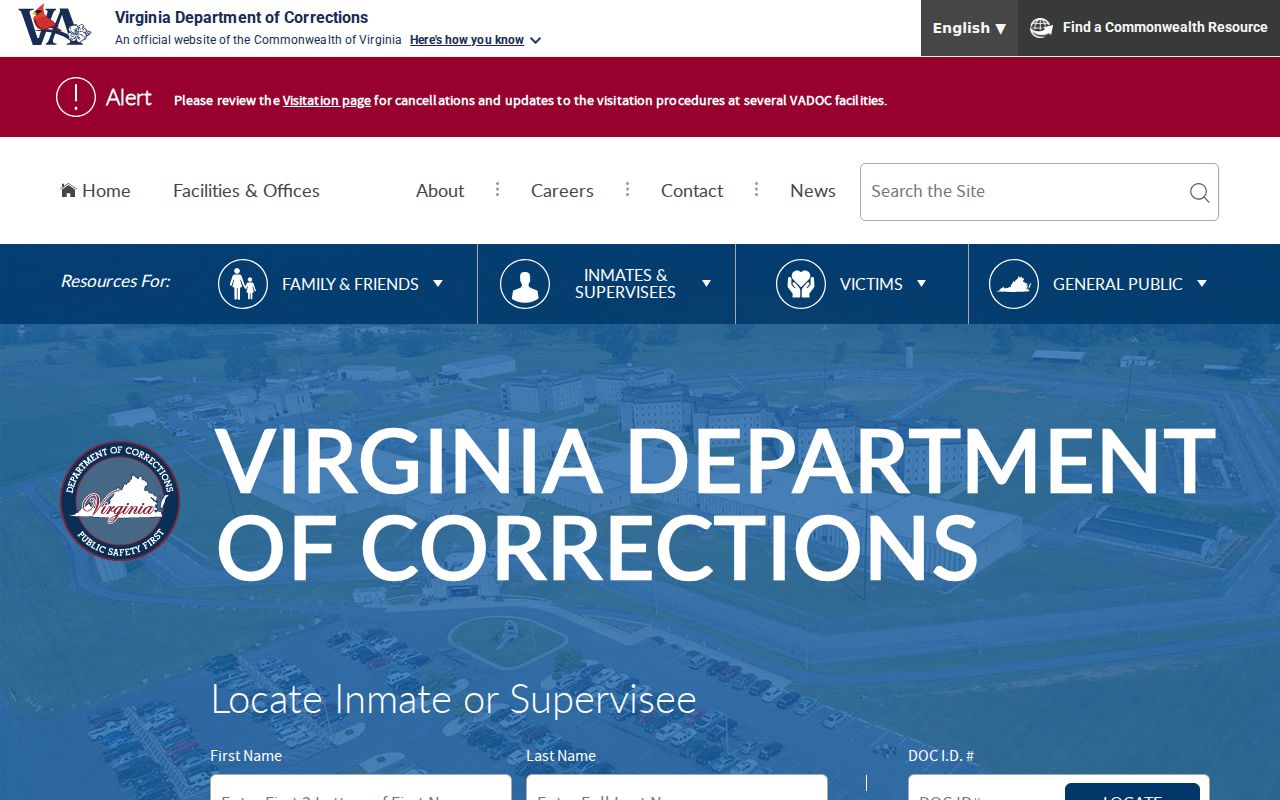
The locator answers narrow custody questions. It will not infer a residential address or a complete local detention record.
Danville Library Directory Shelf
The historical layer of the residents directory lives at the Danville Public Library genealogy desk. Research databases include FamilySearch and in-library Ancestry Library Edition. Directory runs begin in 1879. Holdings are described from 1920 to 1978. Ask for a specific bound, microfilm, digitized, or licensed volume, since not every catalog entry sits online.
A directory entry typically gives a name, initials, address, occupation, and sometimes a spouse or widow notation, plus publisher abbreviations. It is an annual editorial listing. It is not a current census. Compare adjacent volumes before trusting any single year. Then pair the result with census schedules, deeds, obituaries, or probate material, with the full collection history and reading method on the Danville city directory page.
Danville Scam Checks
A suspicious notice can often be tested against free public records. That test costs nothing. It comes before anyone pays a stranger. Virginia Treasury runs a free unclaimed-property search, so a fee demand in a letter is a red flag on its face. At the Circuit Clerk, ordinary copies cost $0.50 per page. Certification and mailing fees should be confirmed with the clerk directly.
A deed-copy solicitation, a court-payment demand, or an unclaimed-money message deserves a call to the real office. Check by document number or official phone. The Virginia Treasury unclaimed-property page is the right starting point for a claim. It shows the genuine state route, not a link from an unknown sender.
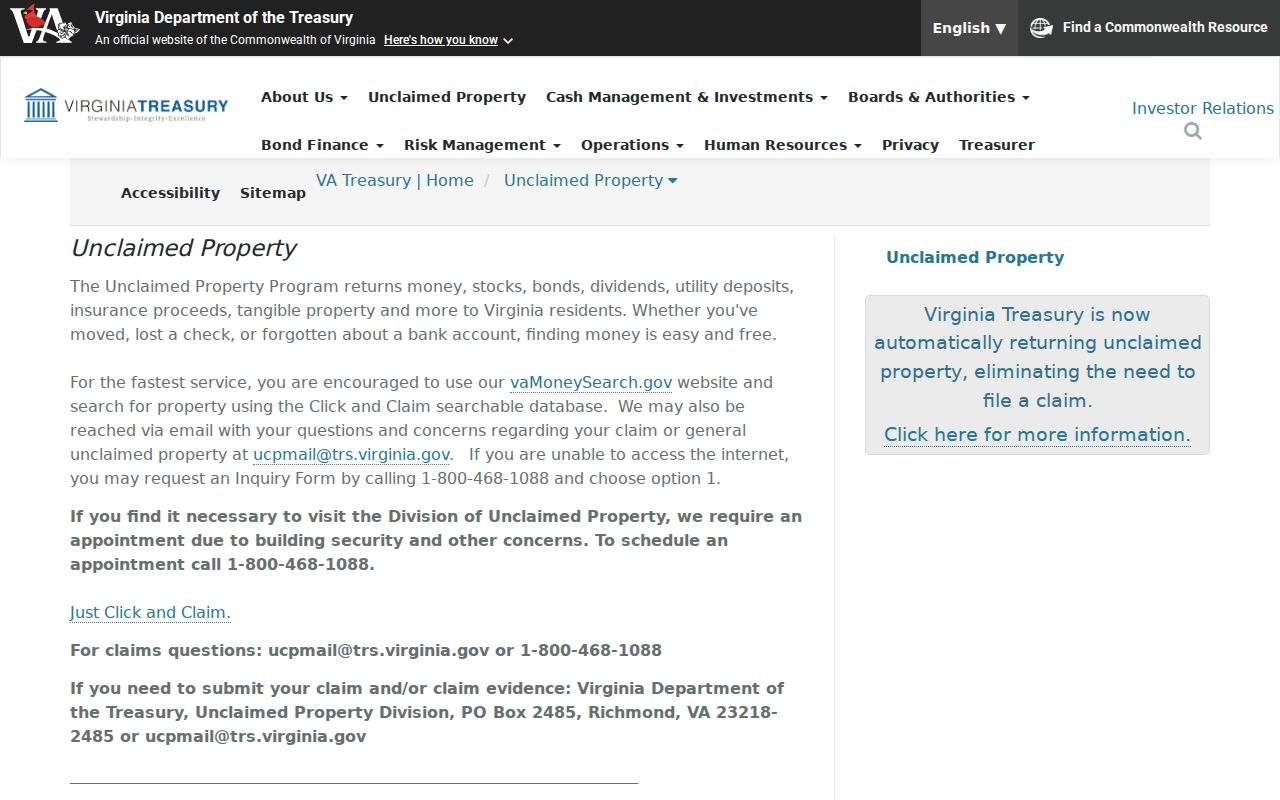
The state search route gives a Danville resident one direct verification step. Use it before sharing details or sending payment to anyone who makes first contact.
Danville and North Danville Names
Older searches in this area need a geography check first. Danville incorporated as a city in 1890. North Danville, also called Neapolis, was annexed in 1896. The 1887 Turner directory carries both names in its title. Library of Virginia microfilm includes North Danville council material. A person or address sitting near that old boundary may be missing under one locality label. It may yet be fully present under another.
Search all three terms, Danville, North Danville, and Neapolis, when the era fits. Record the locality exactly as the source printed it in your notes. A modern postal label or today's city line cannot rewrite the jurisdiction's own record. A directory, council record, census schedule, or deed carries that jurisdiction on its face.
Past Danville Resident Directories
Tracing a former Danville address works best in reverse. Start with the current parcel and work backward through deeds. Then widen into directory years, census schedules, Sanborn maps, newspapers, and probate records. The Library of Virginia holds city court, fiduciary, deed-index, marriage-index, and council material on microfilm. It also holds much of it in originals. Danville's digitized newspaper collections run from 1866 through 2015. They can add an obituary, public notice, or organization mention to a dated household trail.
Keep each source type in its lane. A Sanborn map dates a building footprint and its use, not its owner. A newspaper notice gives family context, not an official address. A directory entry records a printed association for its volume year alone. Used together, these records for past residents of Danville are far stronger kept in time. Any single one pulled out of context loses that strength.